
How IVF has led to a record number of single moms in their 40s
 Caroline Molloy
Laura Terry dreamed of having kids — a family she could call her own. But there was one challenge: She wasn’t interested in dating, marriage, or partnering up.
So, she came up with an idea for an unusual present to give herself.
“For my 39th birthday, I bought a vial of donor sperm,” says Terry, who lives in Nashville, Tenn., and works at a top management consulting firm.
She started the process of having a baby via in vitro fertilization, or IVF, soon after. This path hadn’t occurred to her initially, even though she has a Ph.D. in cell and developmental biology. There just wasn’t anyone in her orbit who had done it. Her epiphany came from a book in which the author described her own journey with IVF.
“I had never heard of being a single mom by choice before that,” says Terry, who is now 44. “It was like a light bulb went off.”
That light bulb is going off for a lot of single women. Today, 44% of women in America are unpartnered; finding someone and settling down has become less of a priority when they’re in their 20s or even 30s. And when some of them are ready to have kids, they aren’t letting singlehood deter them.
Who gets to be a parent is being reshaped by increased access to IVF
The nation’s first IVF baby was born in 1981, when the process was such a novelty that she was referred to as a “test tube baby.” Since then, its use has surged in the United States, and today, IVF accounts for almost 100,000 births each year. That’s up 50% from 10 years ago.
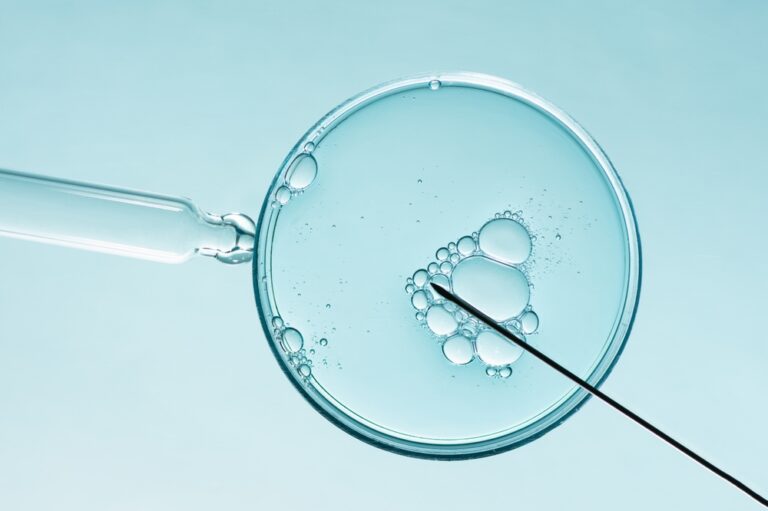
With IVF, which accounts for around 2% of births in America, a woman’s eggs are retrieved from her body and fertilized with sperm in a lab. The resulting embryo is then implanted in her uterus, with the hope it will lead to a pregnancy.
This process has opened the door for many people who couldn’t otherwise conceive children and reshaped who gets to be a parent, including more LGBTQ+ couples.
It has also become a big driver in the number of older single mothers in the U.S. at a time when the country’s overall birth rate is declining. The number of unmarried women in their 40s who are having babies has grown by 250% in the last 30 years, according to data from the government. A portion of these women have partners, but many don’t.