
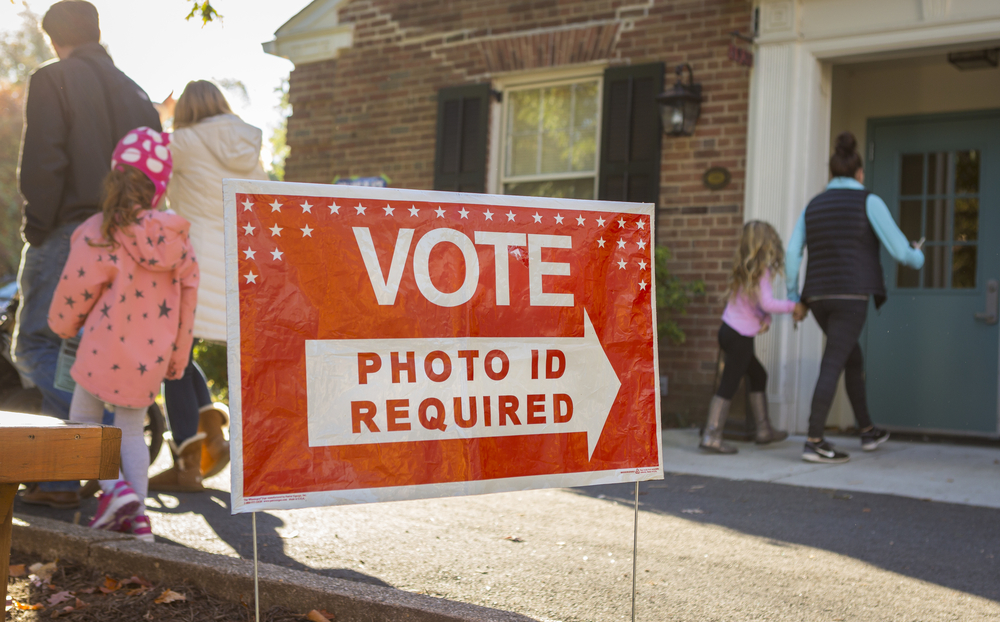
SCOTUS allows New Hampshire to enforce student ID voting ban
 Caroline Molloy
The U.S. Supreme Court on Oct. 22 cleared the way for New Hampshire to enforce its prohibition on using student identification (ID) cards to establish voters’ identities in the Nov. 3 midterm elections, granting state officials’ emergency request and staying a lower court order that had partially blocked the restriction.
In a brief, unsigned order, the justices invoked the longstanding Purcell principle — that lower federal courts should ordinarily refrain from altering election rules on the eve of an election — and concluded the district court had not identified a sufficient basis to depart from it.
“‘This Court has repeatedly emphasized that lower federal courts should ordinarily not alter the election rules on the eve of an election,’” the court wrote, quoting a 2020 decision. “Here, the District Court did not point to anything that would justify deviating from that principle.”
Justice Ketanji Brown Jackson was the sole public dissenter.
The stay does not resolve the underlying merits of the case but will remain in effect as litigation continues.
The dispute centers on H.B. 323, which Republican Gov. Kelly Ayotte signed in April. The law removed high school and college IDs from the statutory list of ID forms expressly valid for obtaining a ballot. It took effect in June.
Secretary of State David Scanlan, a Republican, also issued guidance to election officials that student IDs could not be used to register to vote, request an absentee ballot, or check in at the polls — including under a separate “safety-valve” provision that allows voters without qualifying photo ID to establish identity by other means.